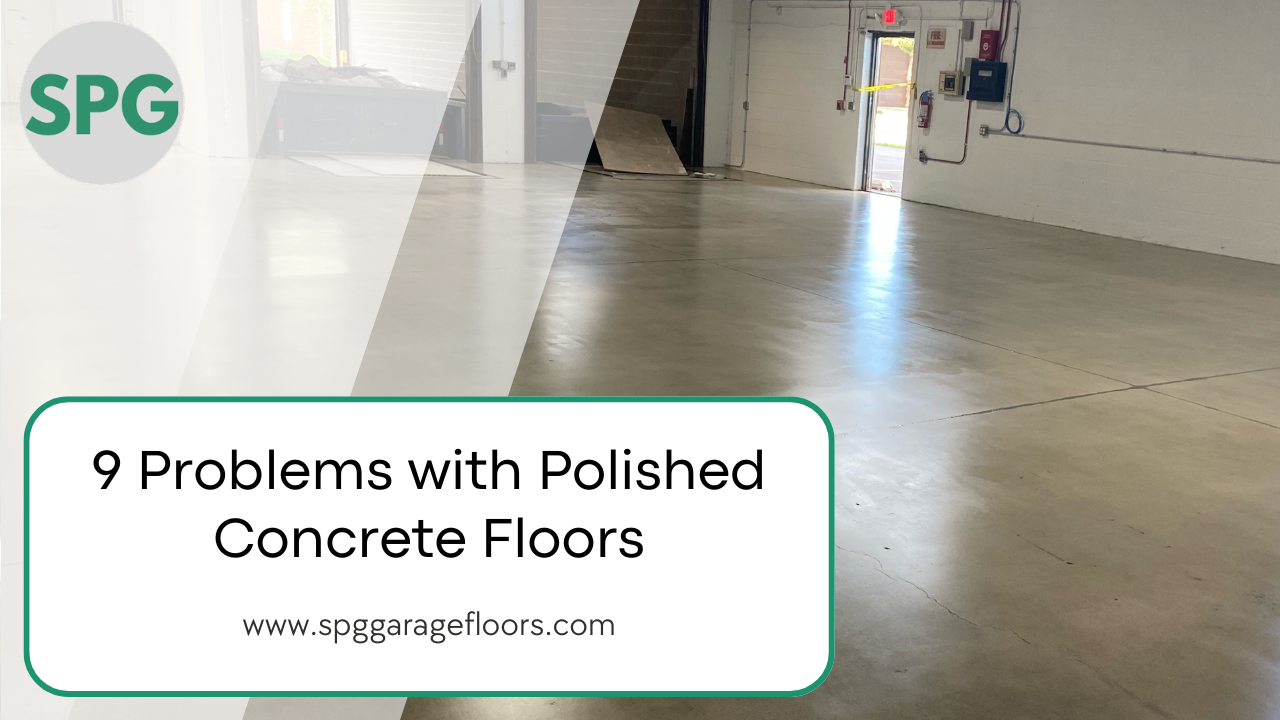
Poured concrete has now emerged as one of the most preferred options for residential and commercial properties. In fact, polished concrete floors are bright in living rooms and warehouses. They are smooth and hardy, with no issues about their upkeep. Many property owners prefer the appearance of white polished concrete floor. Dark polished concrete is also popular with them. Individually colored, smooth, polished concrete floors are also in demand.
It is not flawless like any other flooring system.
When planning a polished concrete garage floor, kitchen, or bathroom floor, it is essential to understand the potential problems that may arise and how to prevent them.
These are 9 problems with polished concrete floors—and how to get them fixed properly.
One of the biggest concerns about the finished concrete floor is the slipperiness. This is mostly in kitchens, bathrooms and basements.
Smooth surfaces are polished. Installers are professional people who can adjust the level of sheen, as well as incorporate slip-resistant treatments. In areas that are easily moistened, such as the polished cement basement floor or garage floor polished concrete system, a significant difference can be found in the surface preparation and traction-enhancing sealers.
It is not the evasion of polished concrete but rather proper installation.
Concrete naturally cracks over time. That includes residential polished concrete flooring, garage floors, and even commercial installations.
The key is understanding that polishing doesn’t cause cracks—poor slab preparation does. During the installation of polished concrete floors, cracks are filled and stabilized. This process blends them into the floor’s character, making them less of a structural issue.
In fact, many decorative concrete floors embrace minor cracking as part of the industrial aesthetic.
Concrete is susceptible to uptake of oil, chemicals or moisture unless sealed. This is more prevalent in garages or in kitchens.
Sealing is important, whether you are deciding to polish a concrete garage floor or polish stained concrete. Most spills in the house and in automobiles can be resisted by a well-densified and sealed floor.
The issue of maintenance is also important—fast cleaning will also avoid staining over time.
Moisture vapor transmission can affect a polished basement concrete floor if the slab isn’t tested beforehand.
This is why professionals perform moisture testing before polishing. In some cases, moisture mitigation systems are installed first. Understanding the polished concrete basement floor cost should include proper prep work—not just surface polishing.
Skipping this step leads to long-term issues.
Yes, concrete finished floors are firm underfoot and can feel cold.
This can be easily solved by using area rugs, radiant heating or the design itself. Polished concrete kitchen floors are popular with homeowners. They look modern and offer warmth, especially when paired with underfloor heating.
Comfort has to do with planning rather than evading the material.
Some assume all polished concrete is gray. That’s simply not true.
Polished concrete floors are of diverse kinds, such as dyed, stained, and integrally colored. Customization is also very popular, from earth tones to high polished concrete floor colors.
Scored concrete floors add design lines. Stains can turn plain slabs into elegant, decorative cement floors.
A common question is, is polished concrete expensive?
The cost for polished concrete floor systems can be higher upfront than basic coatings or vinyl. When you think about durability and low maintenance, it often costs less over time. A long lifespan makes it even better.
Unlike many flooring types, properly installed residential polished concrete flooring can last decades without replacement.
Large open spaces with industrial polished concrete floors can create echo.
The fix? Add soft elements like acoustic panels, furniture, or rugs. In residential settings, sound rarely becomes a serious issue once the space is furnished.
It’s a design adjustment, not a flooring flaw.
The majority of concrete floor problems are not due to the material but rather due to poor workmanship.
The right grinding levels, use of densifier, and polishing stained concrete are required in the installation of a true polished concrete floor. The consequence of ignoring steps is dulling, dusting or premature wear.
It is important to hire specialists when creating a polished concrete bathroom floor, upgrading the garage floor, or converting a basement.
When installed properly, the benefits of polished concrete floors include:
Polished concrete floors range from bold, dark designs to minimalist white styles. This material shapes modern architecture.
The key isn’t avoiding polished concrete—it's choosing the right team and process.
At SPG Garage Floors, we focus on polished concrete solutions. Our products are durable and stylish, showcasing expert craftsmanship.
Concrete floors that are polished are not only fashionable but also provide a permanent solution. They are stronger and more practical and suit modern design. Moisture, slipperiness, and cracking are some of the problems. You can avoid these problems. All one has to do is plan it out, get installation professionals and the appropriate finishing system.
The majority of problems with polished concrete do not pertain to the material. They are as a result of errors during installation or planning. When properly installed, polished concrete is very durable.
It requires minimum maintenance and offers design features that are not found in many other floors. In the case of a garage, basement, kitchen, or commercial space, the success is covered by the professional hands. They are familiar with slab, moisture control and polishing. Polished concrete is not a gamble with the right crew and procedure, but rather an investment.
When wet, polished concrete is sloppy. Nevertheless, the finish can be changed and slip-resistant treatments are added by professional installers. Filling the surface with correct sealers and surface preparation significantly reduce the chance of slip. This applies to kitchens, bathrooms, and garages.
Well-installed and maintained polished concrete floors can last more than 20 years. At home they tend to stay longer. They are usually more durable than conventional flooring materials.
Coatings or vinyl may be cheaper than polished concrete. Its long life, low maintenance requirement and durability tend to make it less expensive in the long run.
Natural development of concrete may have some small cracks. The professional preparation however involves crack repair and stabilization prior to polishing. Small cracks are usually regarded as a part of the aesthetic nature of the floor.
Yes. Polished concrete may be dyed, stained or integrally colored. There are a variety of colors to choose from. Besides that, decorative features such as scoring or pattern designs are also available.
.png)
